If you have ever sat down to make a budget and given up after ten minutes of spreadsheets, you are not alone. Detailed budgets that track every coffee and bus ticket work for some people, but many beginners find them exhausting. The 50/30/20 rule offers a simpler starting point: instead of dozens of categories, you divide your take-home pay into just three buckets.
Try it: use our free 50/30/20 Budget Calculator to split your take-home pay in seconds.
This guide explains how the rule works, walks through a worked example, and covers when you might want to adjust the percentages to fit your own situation.
What Is the 50/30/20 Rule?
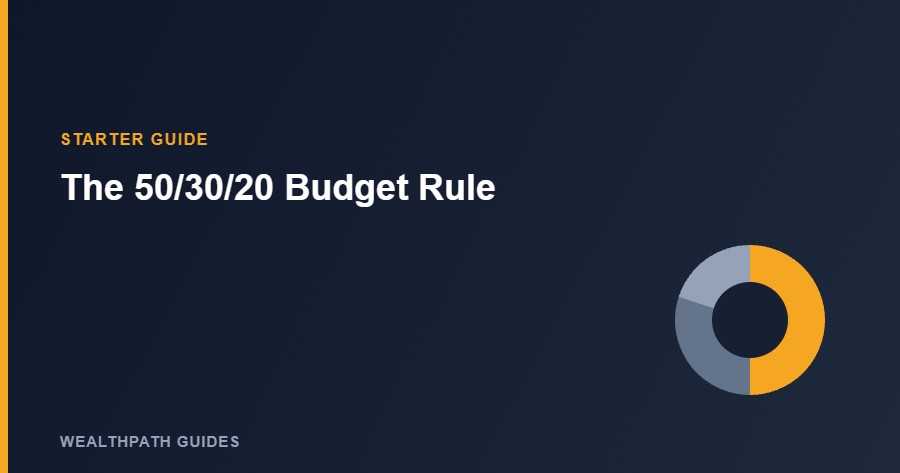
The 50/30/20 rule is a simple budgeting framework that splits your after-tax income into three parts:
- 50% for Needs – expenses you must pay to live and work.
- 30% for Wants – spending that makes life enjoyable but is optional.
- 20% for Savings and Debt Repayment – money that builds your future.
The framework was popularized in the United States by Senator Elizabeth Warren and her daughter Amelia Warren Tyagi in their book All Your Worth. Its appeal is that it gives you a clear target without forcing you to micromanage every purchase.
Step 1: Start With Your After-Tax Income
The rule is based on the money that actually lands in your bank account – your net pay after income tax and payroll deductions. If your employer automatically deducts retirement contributions (such as a 401(k) in the U.S. or a workplace pension elsewhere), you can add those contributions back and count them toward your 20% savings bucket. That way you get credit for the saving you are already doing.
If your income varies from month to month – for example, if you are self-employed or work on commission – use a conservative figure, such as the average of your lowest three months over the past year.
Step 2: Understand the Three Buckets
Needs (50%)
Needs are the costs you cannot easily avoid. A simple test: would skipping this payment lead to a serious problem, such as losing your home, your job, or your credit standing? Typical needs include:
- Rent or mortgage payments
- Utilities such as electricity, water, and heating
- Basic groceries (not restaurant meals)
- Health, car, and home or renter’s insurance
- Transportation to work
- Minimum payments on loans and credit cards
- Childcare that allows you to work
Wants (30%)
Wants are everything that improves your quality of life but is not essential: dining out, streaming subscriptions, hobbies, travel, new clothes beyond the basics, and upgrades such as a bigger phone plan. Wants are not “bad” – the rule deliberately leaves room for them, which is one reason people find it easier to stick with than stricter budgets.
Savings and Debt Repayment (20%)
This bucket is for your future self. It typically includes building an emergency fund, contributing to retirement accounts, investing, and paying down debt beyond the minimum payments. (Minimum payments belong in Needs; extra payments belong here.)
A Worked Example
Suppose your take-home pay is $4,000 per month. The 50/30/20 split would look like this:
| Bucket | Share | Monthly amount |
|---|---|---|
| Needs | 50% | $2,000 |
| Wants | 30% | $1,200 |
| Savings & debt repayment | 20% | $800 |
Now compare this with what you actually spend. Many people discover that their needs take up more than 50% – especially if they live in a high-cost city. That is useful information, not a failure. It tells you where the pressure in your budget really is.
How to Apply the Rule in Practice
- Review two or three months of statements. Sort each expense into Needs, Wants, or Savings. Do not aim for perfection; a rough picture is enough to start.
- Calculate your current percentages. Divide the total of each bucket by your monthly take-home pay.
- Automate the 20% first. Set up an automatic transfer to savings or investment accounts on payday, so saving happens before spending. This is often called “paying yourself first.”
- Adjust Wants before Needs. Wants are usually the fastest place to free up money – cancelling one unused subscription is easier than moving house.
- Revisit every few months. Your income and costs will change. A quick check-in every quarter keeps the budget realistic.
When to Adjust the Percentages
The 50/30/20 split is a guideline, not a law. Some situations call for different numbers:
- High cost of living: If housing alone takes 40% of your income, a 60/20/20 or 60/25/15 split may be more realistic in the short term.
- High-interest debt: If you carry credit card balances at high interest rates, you might temporarily shrink Wants and push more toward debt repayment – for example 50/20/30.
- Ambitious goals: People aiming for early financial independence often save far more than 20%, sometimes 40% or higher, by keeping both Needs and Wants lean.
- Irregular income: Base the budget on your lower-income months and treat any extra income as a bonus that goes mostly to savings.
Common Mistakes to Avoid
- Classifying wants as needs. A car is often a need; a new luxury car is partly a want. Be honest about the difference.
- Using gross income. Budgeting from your pre-tax salary makes every bucket look bigger than it really is.
- Forgetting irregular expenses. Annual insurance premiums, car maintenance, and gifts can wreck a monthly budget. Divide them by 12 and include them.
- Giving up after one bad month. The goal is a direction of travel, not a perfect score every month.
Is the 50/30/20 Rule Right for You?
The rule works best for people who want a simple structure and do not enjoy detailed tracking. If you prefer more control, methods such as zero-based budgeting (assigning every dollar a job) may suit you better. Either way, the key idea is the same: decide in advance where your money goes, and make saving automatic. Once your budget is stable, you can start thinking about longer-term topics like compound interest and writing a personal investment plan.
Key Takeaways
- Split your after-tax income into 50% Needs, 30% Wants, and 20% Savings and debt repayment.
- Minimum debt payments are Needs; extra payments count as savings.
- Automate the 20% on payday so it happens before spending.
- Adjust the percentages to fit your cost of living and goals – the structure matters more than the exact numbers.
Important Disclaimer
The information in this article is for general educational purposes only and does not constitute financial, investment, tax, or legal advice. All investing involves risk, including the possible loss of principal. Examples are simplified illustrations, not predictions. Consider consulting a qualified professional before making financial decisions. See our full Disclaimer.